Saturday, 30 May 2015

Meaux Abbey - a forgotten part of Hull's history

Meaux Abbey earthworks in winter
(copyright Paul Glazzard,
used under creative commons license)
If you go to Meaux Abbey, about seven miles north of Hull, don't expect to find impressive remains like those at Fountains or Rievaulx. Even if you managed to find the tiny hamlet of Meaux there is nothing left of the Abbey but a few earthworks. It is hard to believe that those few bumps in a field were once an influential Cistercian house like Rievaulx without which the city of Hull would never have existed.


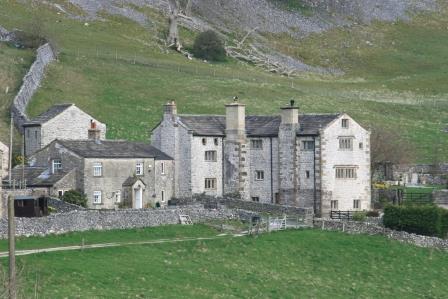
Kilnsey Old Hall, a grange of Fountains Abbey
(copyright the author, 2009)
The monasteries were a key part of the mediaeval economy and owned large areas of land and property. To provide money for the monks, lay brothers ran farms called granges* which not only provided food and clothing for the brothers but produce for sale. A key product was wool. Around 1200AD the abbey acquired land at Myton and established a grange there. The settlement which grew up around it was called Wyke and would become the town of Hull. Myton was ideally situated, where the river Hull flows out into the Humber, for the export of fleeces from the Abbey's lands to markets in Western Europe. Like many fine churches in East Anglia, Hull's beautiful Holy Trinity Church was built with the proceeds of the wool trade in around 1300

Holy Trinity Church, Hull
(copyright David Wright 2006,
used under creative commons license)
.

At this time, the Abbey was busily draining large areas of land in the Hull Valley and creating more pasture for livestock. In the process it formed many of the inland waterways which still link to the River Hull today. Beverley Beck, for example, is a very ancient watercourse that carried wool the couple of miles from from the town's market to the River Hull and down to the Humber.

'Wyke of Hull' rapidly became one of the most successful wool towns in the country. By 1205, only London, Boston, Southampton and Kings Lynn paid more in wool tax, and Wyke exceeded not only traditional local wool markets like Beverley and Hedon but also the city of York. Most of the wool merchants were from elsewhere, particularly the continental regions of Flanders, Holland, Germany and France. English merchants were from local wool towns like Beverley. Instead, the Abbey and inhabitants of Wyke made their money from port dues and from all the infrastructure that went with the mercantile trade such as inns. The Abbey was the effective civil as well as ecclesiastical authority in the town with its own jail and courts.

By the late 13th century Meaux Abbey had got itself into financial difficulties. It had also come to the attention of the King that Wyke was a much more favourable port than the ports of Ravenser and Hedon which already belonged to the crown. Thus in 1293 Edward I acquired the town and its port. The abbey was very disgruntled at the price, but presumably was not in a position to argue when the buyer was the king and when they were deep in debt. Thus came to an end the influence of the Cistercians in the area. In 1299 Edward I granted a royal charter and Wyke began a new era as 'the King's town on the river Hull'. It has proudly borne three gold crowns on its coat of arms ever since, although ironically has been something of a hot-bed of republicanism from the Civil War, when it refused entry to King Charles I, to the present day when it was the only city in the country not to apply for any licenses to hold a street party to commemorate the Queen's jubilee!

One look at a map shows the wisdom of Edward's choice. The town of Ravenser no longer exists at all, having been long since lost to coastal erosion, and the village of Hedon is now so far from water it is hard to believe it was once a port. Wyke, on the other hand, is now a city of more than 250,000 people and went on to become one of the wealthiest mercantile towns in the north. But more of that in a later post...

* A good example of a grange can be seen at Kilnsey in Wharfedale which belonged to Fountains Abbey. Wool was taken from Kilnsey along Mastiles Lane. This monastic drover's road can still be followed from Kilnsey to Malham and is a very pleasant walk of about 5 miles.

Friday, 13 February 2015

Origins of some East Riding place names


Aike - I haven't been able to find the origin of this name, although the local expression 'Yacker backer Arram' makes me wonder if it derives from the Viking 'yacker' (acre). It is interesting to note that in early times Aike was an island in the River Hull.

Aldborough - old fortress (Viking)

Anlaby - 'Olafr's farm (Viking)

Bilton - Billa's farm (Viking)

Bridlington - settlement of Beortel's people (Anglo-Saxon)

Cawkeld - would appear to be Viking, as kelda is Old Norse for a spring. Cawkeld is an area of low lying pasture with springs where water from the chalk wolds above flows into the feeder streams of the river Hull. Perhaps it meant cow springs or cold springs.

Cottingham- Ket's (Ceridwen, a deity) or Cotta's people's place (Anglo-Saxon or mixed Anglo-Saxon and Celtic)

Dunswell - ?from Douceville in reference to a large number of springs/wells in the area

Eske -  this long depopulated settlement on the east bank of the river Hull has a Viking name meaning ash tree. This is the same root of Norse names in other parts of Yorkshire like Askrigg in Wensleydale (ridge of ash trees)

Flamborough - Flein's fort (Viking)

Fridaythorpe- Fridaeg's farm (Viking)

Goodhamham - settlement of Godmund (Anglo Saxon) - Goodmanham was the site of a major pagan shrine (where the parish church is now located) and the capital of the Anglian kingdom of Deira

Hunmanby - hundsman's farm (Viking)

Hutton - high farm (old English)

Keldmarsh - a compound name. Keld is Viking for a spring. This area is still a marshy area with springs, and is now a nature reserve belonging to the Yorkshire Wildlife Trust

Kilnwick - Cylla's farm (Anglo-Saxon)

Kirk Ella - the origin is disputed. It may mean the place of worship of Ella, or Ella may derive from aelf lea, the Elves clearing, with Kirk distinguishing it from other locations e.g. West Ella

Leven - one of very few Celtic place names in the area, the others being the names of rivers like the Humber, Hull, Ouse and Derwent. The invading Anglians almost obliterated the Celtic heritage of the area. Leven derives from 'llyfn' meaning smooth

Lund - Viking for a grove. There are regions in Sweden and Norway of the same name

Marfleet - marr is Norse for sea, while fleet is both Norse and Old English for a stream or creek
 
Meaux - Originally Melsa/Melse - Scandinavian/Anglo-Scandinavian, meaning a sandbank in a pool. Francophone spelling adopted by the Cistercian monks of Meaux Abbey whose mother house was in the French town of Meaux.  

Pocklington - Anglian settlement of Poca's people

Skerne - an Old English name meaning bright/clear but modified with the 'sk' sound to be pronounceable by the incoming Vikings

Skidby - clearly Viking in view of the 'sk' sound and the -by ending. Probably means either Skitr's farm or the farm in the place for gathering firewood

Storkhill - Stork appears to be an Anglian name referring to an island of Storks. Storkhill is one of the water towns of Beverley, the others being Sicey, Sneerholmes, Thearne, Tickton, Weel and Woodmansey.

Sunderlandwick – deserted village near Driffield. Probably meaning the dairy farm in the 'sundered land' (i.e. set apart - in the case of the NE town of Sunderland, a monastic designation) 
 
Sutton - Anglo-Saxon meaning 'south town' - in this case, the south town to Wawne.

Thearne- Anglian: a thorn tree

Tickton - Tica's farm (Anglian)

Walkington – Anglo-Saxon, meaning either settlement of Wealca's people or settlement of the Welisc. The Anglo-Saxons referred to the British tribes they displaced as Welisc or foreigners. This is where the word Welsh derives from, and these displaced tribes would have spoken an early form of Welsh.
 
Wawne - Anglian meaning a quagmire.

Wetwang - this name appears to be Norse but the exact meaning is unclear. Vangr means field (c.f. Stavanger) and vaettr may mean a summons to a trial for an action.

Weel - Anglian for a whirlpool

Wilfholme – holme can mean a low flat island but more often locally it refers to a water meadow and there are many located along the River Hull (Snakeholmes, Cattleholmes, Fishholme, Featherholme, Hempholme, Standingholme, Hallytreeholme, Heigholme, Sandholme, Sneerholmes and Bransholme, just to name the ones immediately beside the River Hull!)

Woodmansey - Anglian. A woodman's pool


Wednesday, 21 January 2015

Visitors from the arctic

I'm looking forward to seeing what wetland birds the winter blows in to the Hull Valley. Visitors from the arctic frequently include pink-footed, barnacle and white-fronted geese and whooper swans. The resident greylags and canadas at Hornsea Mere are habituated to flock to any human being appearing with a plastic bag. I noticed a solitary barnacle goose among some resident geese last year and was amused to watch it carry on grazing oblivious as all its companions charged furiously towards a visitor who stepped into their midst to feed them. Clearly this wild northerner hadn't learnt what comes out of plastic bags. Actually this behaviour can get quite annoying at the Mere as the birds appear the minute you stop your car and some are very persistent, like this swan who had a good look at us through the car window.

It's good to see that the bitterns are back at both Hornsea Mere and Tophill. Two of my favourite ducks, the red breasted merganser and the goosander, have also been in evidence. The merganser has a delightfully adolescent spiky hairdo. The male goosander is truly beautiful bird with a bottle green head, crimson bill and sleek white body flushed with salmon pink. We saw both at Tophill last year but unfortunately too far away to get good pictures.


This super little family made lovely end to a fantastic week of wildlife in Skye last year, however. It was pouring with rain, getting darker all the time and seeming like it was time to turn in for the night, when along came this adult with seven babies - each with a miniature version of the distinctive sawtoothed bill. I would love to see goosanders with chicks as they have a very endearing habit of letting them ride 'piggy back' - sometimes the whole brood struggling to get on board at once!

Waxwing weather

It's waxwing weather. Temperatures here are below freezing and we've had several falls of snow over the last week. It's this kind of weather that blows in flocks of birds like waxwings, redwings and fieldfares that feast on berries in trees and hedges. I had a most unlikely encounter with waxwings one bitter, icy morning when I arrived at work and spotted a bush full of these beautiful passerines in the hospital car park. They are so named because their wings look as if they have been splashed with scarlet and yellow sealing wax.

The redwing and the fieldfare sit at opposite ends of the size range of British thrushes. The redwing, distinguished by a russet underwing which is most apparent in flight, is the smallest whilst the fieldfare is a large thrush which is distinguishable from song and mistle thrushes by a lot of grey in its colouring - on the head and rump - and v shaped spotting on the breast that gives the appearance of a herringbone tweed waistcoat! Fieldfares are usually seen in flocks and prefer fields and hedges but sometimes drift into gardens in a harsh winter. Last winter a relative told me he had watched a flock of fieldfares strip the rowan in his garden bare whilst on the phone to a friend!

So far I haven't seen either species this winter but both have been reported at nearby places in the Hull valley. I have had to make do with a huge mistle thrush hopping around my neighbours front lawn but I shall be keeping my eyes open and the binoculars handy.

Thursday, 18 July 2013

Yorkshireisms


It’s only as I’ve got older and seen the uncomprehending looks on my friends faces that I've realised how local some of the sayings were that we used at home. Yorkshire sayings, like Yorkshire people tend to be very apt, blunt and with a dry sense of humour. Here’s a selection. I can’t guarantee these are the exclusive preserve of Yorkshire and a few may have crept in via my relatives from ‘t’other side o’ t’hill’!
Health

Not surprisingly I can't think of any euphemisms for 'absolutely smashing, thank you' but quite a few expressing the reverse! A suitably non-commital reply to enquiries would be 'Fair to middlin''. ‘'Ee looks lahk death warmed up’  would suggest something a little worse, whilst ‘Ee’s popped ‘is clogs’ means that he’s died. Apparently expression comes from when a mill-workers wife would pawn his clogs after his death.

Intellect
Yorkshiremen are not know for being over-generous with complements and you are more likely to find sayings concerning the want of brains rather than the reverse.


Thick as two short planks

Very stupid

Daft as a brush

Ditto

He’s so sharp, he’ll cut ‘imself

He’s being a clever-dick

Listen who’s  been in t’knife-box!

Put down to a clever-dick

Not ser green as cabbage-lookin’

She has more brains than would be suggested by appearances
 
Money
Money is a matter reputed to be very close to a Yorkshireman's heart, so not surprisingly there are a lot of witty sayings to do with money. The most famous is the ditty 'Hear all, see all, say nowt; Eat all, drink all, pay nowt; And if tha does owt for nowt, do it for thisen.'
Others include:

She’s got money to cobble dogs

She’s very rich (can afford to throw money at dogs)

You’re cheaper to keep for a week than a fortnight!

To someone who eats a lot/has expensive tastes

They haven’t got tuppence to rub together

They are very poor

More brass than brains

More money than sense

She looks like she’s lost a pound and found a shillin’

She doesn’t know whether to be happy or sad

Where there’s muck there’s brass

 
Food
We like to eat well in Yorkshire, so lets have none of that minuscule, pretentious, art-on-a plate nonsense!

‘All clout and no dinner’

From the era when working men took a meal wrapped in a cloth to work. An expression for a disappointing item which is all packaging and nothing inside

Yer could put it in yer eye corner and see no worse!

Derogatory remark about the size of the item

It’s like feeding elephants comfits

Something which comes in stupidly small pieces

Neither nowt ner summat

Mediocre

Hard as the old lad

Very hard

Burnt to snicksnarls

 Done to a cinder
                                                       

Friday, 17 May 2013

East Riding place names

Although most Welsh and Gaelic place names are still comprehensible to speakers of those languages,  the meanings of Yorkshire place names are obscure to modern English speakers. But Yorkshire place names have a fascinating story to tell - indeed, they chart the history of the whole of England between prehistoric times and the Middle Ages.

The oldest names are Celtic, for this area was once occupied by Briton tribes like the Brigantes and the Parisi who were first dominated by the Romans and then gradually pushed back into Cumbria and Wales by the Anglo-Saxons, but not without leaving behind a few place-names, especially the names of rivers. Local examples inlcude Roos (Welsh rhos: a moor), Leven (Welsh llyfn: smooth), and the rivers Derwent (‘oak river’), Ouse,  Hull and Humber.  The Romans also left behind a few placenames, primarily military in nature, like Doncaster and Tadcaster
Next came the Angles who vied for domination with the Danes. As the latter eventually gained the upper hand and established their capital in York, Danish (and to a lesser extent Norse) place names predominate in North East Yorkshire.  There are still a good many Anglo-Saxon place names in the area, such as Goodmanham (‘Godmund’s home’, the site of the most important pagan shrine in the Kingdom of Deira), Bridlington (‘Beohrtel’s farm’) and Pocklington (Poca’s people’s farm). Saxon place names can often be identified from elements such as –ham, -ton, - ing, -ley  and –field, and Viking place names by elements such as –by, -thorpe, -dale etc but caution is needed as many mixed place names exist (e.g. Grimston) and because a lot of words were similar in the two languages (e.g. holm which can be a Saxon or Norse element). One important illustration of this is the word ‘wold’ which is an Anglo-Saxon word (c.f the Kent Weald) but the local use of it is probably Norse, as the meaning of the related Norse word vall (rolling upland pasture) better describes the landscape than the meaning of Old English ‘wold’ which means forested uplands.
Common Viking place names elements include -by (village e.g. Willerby, Anlaby, Skidby), thorpe (farm e.g. Fridaythorpe – possibly Freya’s Thorpe, Everthorpe, Foggathorpe. Tibthorpe) and –kirk (church, as in Kirkella, Kirkby Underdale). Ferriby is a particularly interesting example, as our word ferry comes from Norse ferja- meaning to carry across water. This suggests that Ferriby has been a crossing on the Humber since a very early date. Watery place name elements in the SE of the area demonstrate the former topography of the area e.g.  holme (a water meadow,as in Wilfholme), carr (marshy woodland)  and keld (a spring, as in Keldmarsh, Cawkeld and Dunkeld which are all wet places in the Hull valley). A toft was a homestead, as in Langtoft. A burgh was a fort or stronghold, as in Flamborough – Flam’s stronghold. Use of dale rather than valley or vale in the Wolds is Norse (e.g. Thixendale) as it is in Dales and Hebridean placenames. Sea, in the names Hornsea and Skipsea means a lake, as does mere. The common use of beck for a stream in the East Riding is also Viking in origin. another expression which has Norse origin is the use of ‘bottoms/botton’ to refer to a valley bottom (as in Melton Bottoms) and is also found in Dales place names (c.f. Starbotton). Where ‘wick’ occurs inland it is Anglo-Saxon in origin, meaning a field, but on the coast it originates from the Norse vik  meaning bay (e.g. Thornwick) which also occurs frequently in Hebridean placenames as –vaig.
Finally the Normans arrived in 1066 and a number of  French or ‘Normanised’ place names can be seen in the area e.g. Meaux, Wharram le Street, Thorpe le Street, Kirkby Malzeard. 

Friday, 3 May 2013

Monastic houses in mediaeval Beverley


Monastic Houses of Mediaeval Beverley


Beverley had a number of religious houses in mediaeval period. The most important of these was obviously Beverley Minster  A monastery (possibly a minster) called Inderawuda, was recorded as early as 685 and was also mentioned by Bede who explainsthat the name meant ‘In the wood of the Deirans’. The present Minster was a collegiate church of canons built in 1225 on the site of the Early Mediaeval minster. Until its suppression in 1548, the church served as a college for canons, its status then changing to parish church.

Probably the next most significant was Preceptory of the Holy Trinity of the Knights Hospitallers, remains of which have been found under the car park onTrinity Lane, the station yard and other sites around the station. It was founded soon after 1201, when Sybil de Valloines gave the Order the manor of the Holy Trinity. It became one of wealthiest houses of the Order in England. The preceptory site has been fairly well mapped out. It included residential and service buildings, a church and a burial ground, enclosed by a deep moat and entered by a formal gateway. The moat still existed when the railway was built but was filled in to create sidings. On maps from 1893 part of the moat is still marked on the east side of the station, roughly parallel with the track, and the area around the station is named as Outer and Inner Trinities. Archaeological investigations of the extent of silt in the ditches that the site was probably abandoned following the Dissolution.

Both the Franciscans and Dominicans had a presence in the town; Greyfriars (Franciscan) was probably founded pre-1267 at a site within the town boundaries, but moved to land granted to the friars around the chapel of St Elena on the Westwood in 1297. It probably stood somewhere near Albert Terrace, where remains relating to the Friary, including burials, have been found during development work. Remains including over 300 inhumations and associated mediaeval objects were also found on the Westwood in the 19th Century and were thought to be associated with the Franciscan friary. Greyfriars is not to be confused with the Dominican Friary, simply referred to as ‘The Friary’ today and now a YHA hostel. ‘Blackfriars’ was founded before 1240 and dissolved in 1539. Near to it was located the mediaeval St Nicholas hospital for the poor, which may have been somewhere between the Friary and the mediaeval St Nicholas church. 

Beverley also had several monastic hospitals. The oldest was the Augustinian St Giles Hospital which was located outside Newbigin Bar around where Minster School stands today, its existence commemorate in the street name St Giles’ Croft. In the Victorian period the fields in this area were marked on maps as ‘St Giles Crofts’ It was a pre-Conquest foundation by someone called Wuse. In 1277 it was in a delapidated state and was united with Warter Priory for priests and `conversi' to be in the hospital. It was disolved in 1538.  A leper house originally stood well away from the town on Humbergate (now Queen’s gate) but was replaced by St Mary’s Hospital in 1402 which was in North Bar Without (possibly somewhere around beginning of New Walk).  Two late mediaeval additions were the Trinity Hospital and Hospital of St John the Baptist. Trinity Hospital was founded in 1397 and had a chapel on the Cross Bridge (see map in the previous post). It became the Corporation Almshouse after the dissolution and was later used as the town gaol until it was demolished in 1805. The Hospital of St John the Baptist (c1444 – 1547) was on the west side of Lairgate to the south end.  It was suppressed in 1547 but continued as a maison dieu into Elizabeth's reign.  It had a chapel and associated chantry.)